
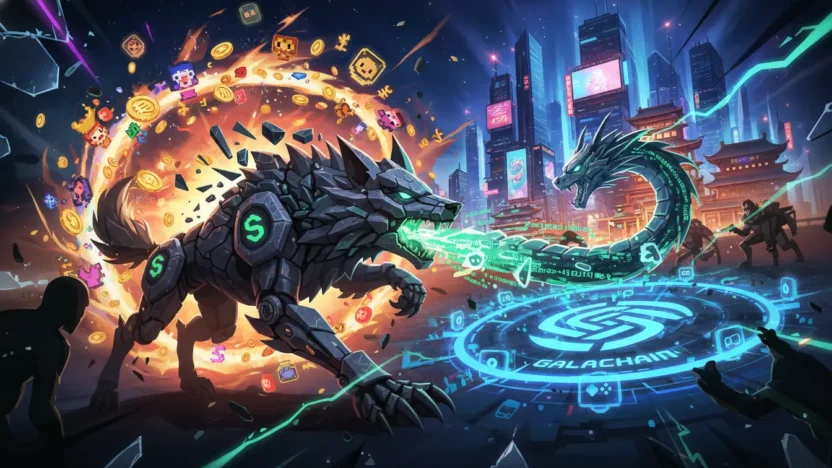
Shrapnel is making a move that could redefine where blockchain gaming finds its next hundred million players. The studio is entering China’s $49 billion gaming market, powered by GalaChain and a government-backed digital asset framework. This isn’t just a distribution deal — it’s a structural bet on regulatory legitimacy as the new moat in Web3 gaming.
For months, the crypto gaming sector has struggled to answer one brutal question: where does real user growth come from? Most Western Web3 titles have cycled through the same early-adopter base. Shrapnel may have just found a different answer entirely.
The timing is deliberate. China’s regulatory posture toward digital assets has been shifting, with government-backed frameworks opening narrow but significant doors. Shrapnel appears to be walking through one of them before the window narrows again.
Why GalaChain is the key that unlocks this market
GalaChain isn’t incidental to this expansion — it’s central to it. China’s digital asset environment demands infrastructure that can operate within sanctioned frameworks. GalaChain’s architecture gives Shrapnel the compliance surface area that a standard EVM chain simply couldn’t provide. 🔑
This matters structurally. Web3 games that have attempted China entry without native blockchain compliance have either stalled or retreated. Shrapnel is approaching this differently — embedding the chain-level framework before launching, not after facing friction.
GalaChain also offers Shrapnel something beyond compliance. It provides a gaming-native blockchain layer built to handle high transaction throughput without the gas fee volatility that alienates mainstream players. For a market as competitive as China’s, user experience at the infrastructure level is non-negotiable.
The government-backed framework angle changes everything
The phrase “government-backed digital asset framework” deserves more attention than it’s getting. This isn’t a vague reference to regulatory tolerance. It signals that Shrapnel’s China entry has been structured around an officially recognized digital asset channel.
That distinction separates this move from dozens of failed Web3 gaming expansions into restricted markets. Most tried to enter through gray areas. Shrapnel is entering through a recognized gate — one that China’s own regulatory apparatus has constructed.
The implication is significant. If this model works, it becomes a template. Other blockchain gaming studios will study exactly how Shrapnel structured its GalaChain integration to satisfy local digital asset requirements.
A $49B market that Web3 gaming has never truly cracked
China’s gaming market is not just large — it is ferociously competitive and fiercely local. Domestic studios dominate. Foreign titles routinely fail on cultural fit, monetization structure, or regulatory hurdles. The $49 billion figure reflects a market that has rejected most outside entrants without hesitation. 🎮
Shrapnel is a first-person extraction shooter. The genre has proven global appeal, but China’s gaming audience responds to games built for their ecosystem — not ported into it. The real test isn’t entry. It’s retention at scale.
Still, the structural opportunity is undeniable. If Shrapnel captures even a fractional slice of active engagement in China, the player base implications for GalaChain’s broader ecosystem would be transformative. On-chain activity tied to a major Chinese gaming audience would represent a category-defining milestone for blockchain gaming.
What the rest of the sector should be watching
This move puts pressure on competitors operating in the Web3 gaming space. Studios that have been building for Western audiences while ignoring Asia-Pacific regulatory developments may find themselves structurally disadvantaged.
The Shrapnel-GalaChain model suggests that the next phase of blockchain gaming growth won’t come from token incentives or NFT speculation cycles. It will come from studios that treat regulatory infrastructure as a first-class product decision — not an afterthought.
- Watch GalaChain’s transaction volume for early signals of China player onboarding
- Monitor whether competing gaming chains announce similar government-framework partnerships
- Track Shrapnel’s token activity across Binance and Bybit for sentiment shifts tied to this expansion
The deeper story here isn’t about gaming. It’s about which Web3 projects have figured out that regulatory alignment — not regulatory avoidance — is where durable value gets built. Shrapnel has made that architectural choice explicitly. That choice, more than any gameplay feature, may determine its long-term trajectory.
China’s digital asset framework is not permanent or static. Conditions could tighten. Windows that open can close. Shrapnel’s advantage exists precisely because it moved when the framework was available and structured itself to operate within it — not around it.
The signal to watch isn’t the announcement itself. It’s whether Shrapnel sustains active user growth inside China over the next two quarters. If the numbers materialize, the entire Web3 gaming investment thesis shifts toward compliance-native infrastructure as the defining variable — and GalaChain becomes a name discussed in very different circles than it occupies today.