
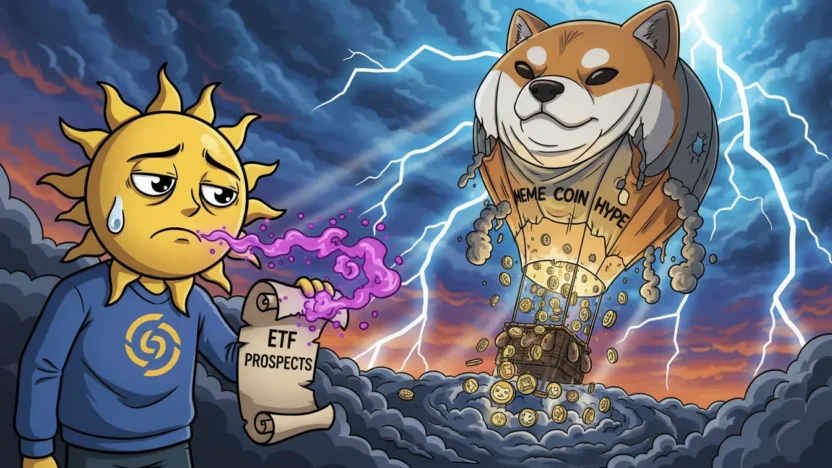
Solana’s ETF prospects are dimming at the worst possible time. The network that once rode a wave of meme coin euphoria into mainstream relevance is now watching that tailwind evaporate — and institutional ambitions may pay the price.
The so-called “Degenerate Season” that turbocharged SOL’s on-chain activity has lost its pulse. Trading volumes on meme-driven launchpads have cooled considerably, stripping away one of Solana’s most visible narratives heading into 2025.
What remains is a more sobering picture. The case for a Solana ETF — once building quiet momentum — now faces a dual headwind: regulatory skepticism from U.S. authorities and a speculative ecosystem that looks considerably less vibrant than it did at peak frenzy.
When the hype machine goes quiet, the regulators notice
There’s a structural problem buried inside Solana’s ETF story. A significant portion of the network’s transaction volume and user growth was fueled by meme coin speculation — not sustainable DeFi adoption or institutional-grade infrastructure usage. 🔍
Regulators aren’t blind to this. The SEC and broader U.S. financial oversight apparatus have consistently scrutinized the quality of activity underpinning any asset seeking ETF approval.
When Bitcoin received its spot ETF green light, the argument rested heavily on deep liquidity, mature futures markets, and a decade of institutional price discovery. Ethereum followed a similar path — slow, deliberate, defensible.
Solana’s pitch has never been quite as clean. Its association with high-velocity retail speculation — however profitable it was for traders — complicates the narrative that asset managers need to bring to regulators.
The meme coin hangover is more than cosmetic
Meme coins weren’t just a sideshow on Solana — they were the engine. Platforms like Pump.fun generated extraordinary transaction counts and fee revenue during peak degenerate activity.
That activity masked deeper questions about network stickiness and developer commitment. Now that the speculative tide is receding, those questions are louder.
The drop in meme coin momentum also affects the optics of Solana’s on-chain metrics. Lower daily active addresses, reduced fee generation, and quieter DEX volumes all create a less compelling statistical case for institutional appetite.
Solana ETF prospects dim as the regulatory clock ticks
Multiple asset managers filed for Solana spot ETF products in the U.S. with cautious optimism following the Bitcoin and Ethereum approvals. The logic seemed sound — if the door was open, why not push through it?
But regulatory headwinds have proven more stubborn than anticipated. The SEC has not shown any urgency in advancing Solana-related filings, and the current environment does little to accelerate that timeline. 📋
Unlike Bitcoin, Solana does not have a robust, regulated futures market in the U.S. That gap matters enormously. It was the existence of CME Bitcoin futures that gave regulators enough comfort to approve surveillance-sharing agreements — a critical step in the ETF approval chain.
Without that infrastructure, Solana ETF applicants are essentially asking regulators to take a larger leap of faith. In the current climate, that’s a difficult ask.
The futures market gap isn’t closing fast enough
CME futures for Solana remain absent from the regulated U.S. derivatives landscape. This isn’t a minor technical footnote — it’s a foundational requirement under the SEC’s own precedent.
Until that gap closes, the ETF approval pathway stays narrow. And with meme coin hype fading, the urgency for exchanges and derivatives platforms to build that infrastructure is arguably lower now than it was six months ago.
What approval timelines could look like
Based on the Bitcoin and Ethereum precedent, Solana would likely need regulated futures markets operating for at least several months before serious ETF deliberations could begin. That timeline, conservatively, pushes meaningful progress into late 2025 at the earliest.
Even optimistic scenarios assume no further regulatory friction, no adverse market events tied to SOL, and a continued thawing of the SEC’s posture toward crypto broadly.
What survival looks like when the degen crowd moves on
Solana’s long-term viability was never truly dependent on meme coins — but the ecosystem must now prove that without the speculative tailwind. 💡
The builders who remained through previous cycles are still active. DePIN projects, consumer-grade applications, and payments infrastructure continue to develop on the network. These are slower-burning narratives, but they carry more regulatory credibility.
The honest challenge is timing. Institutional interest cycles don’t wait patiently for ecosystems to mature. If Solana’s ETF window doesn’t open while broader crypto sentiment remains constructive, it risks missing the moment entirely.
Watch for two signals in the weeks ahead. First, any movement toward regulated SOL futures products on major derivatives platforms — that would be the clearest green flag for ETF progress. Second, monitor whether developer activity and non-speculative on-chain metrics can sustain growth independent of meme coin volume. If they can, the fundamental case rebuilds itself quietly. If they can’t, the ETF story may need to wait for an entirely new cycle to tell it.